


- Posted on
- Shaheryar Khan
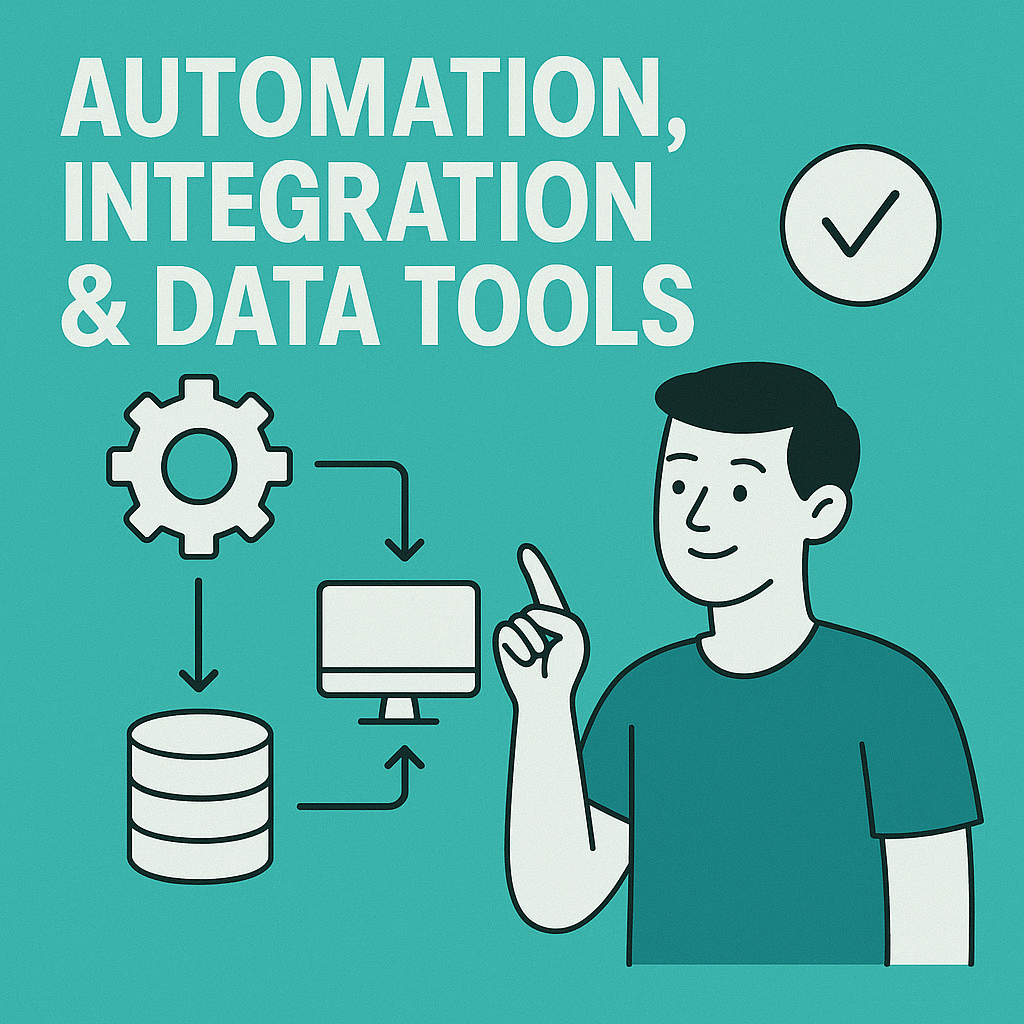
Automation, Integration & Data Tools
The modern marketing landscape demands more than creativity and instinct. The most successful organisations now operate through connected systems, real-time insights, and automated workflows that support consistent customer experiences. As channels expand and customer expectations rise, businesses rely on marketing automation, marketing integration tools, and advanced data tools for marketing to gain clarity, remove operational friction, and improve performance across the entire lifecycle.
Marketing technology has evolved into a sophisticated ecosystem. Campaigns now run across multiple touchpoints, from paid media and email to product usage events and CRM interactions. Without unified workflows or strong data infrastructure, this complexity quickly leads to inefficiencies, inconsistent reporting, and missed growth opportunities. For this reason, automation, integration, and data intelligence form the foundation of modern lifecycle marketing.
This article explores how these capabilities work together, drawing on best practices and analytical frameworks from leading Martech, BI, and automation platforms.
Where Marketing Automation Delivers Strategic Advantage
Marketing automation has expanded far beyond simple email triggers. Today, it supports complex customer journeys, omnichannel experiences, predictive scoring, and cross-team coordination.
Modern automation frameworks enable teams to:
- Streamline repetitive tasks
- Trigger behaviour-based experiences
- Implement automating CRM journeys at scale
- Support personalised lifecycle messaging
- Maintain data accuracy across platforms
- Enable sales and marketing alignment
- Improve lead velocity and qualification
The value of marketing automation grows as datasets expand. Leading platforms integrate real-time behavioral data, enrichment signals, and campaign analytics to create dynamic experiences that evolve with the customer.
Automation and Productivity Gains
Data from enterprise automation platforms shows that organisations significantly reduce human error when automating key marketing processes. Manual data entry is a leading contributor to errors that affect segmentation, attribution, and personalisation. Automated workflows remove these inconsistencies, keeping customer records accurate across CRM, marketing automation tools, and analytics platforms.
Additionally, automation improves productivity by eliminating unnecessary operational tasks. Marketing, sales, and customer success teams regain time to focus on strategy, creative direction, and high-value customer engagements. This shift leads to better outcomes across the customer journey.
Marketing Integration Tools: Building a Connected Martech Stack
Disconnected systems slow down marketing effectiveness. When CRM, email, analytics, and advertising platforms operate independently, teams struggle to create cohesive experiences or evaluate performance correctly. Marketing integration tools solve this challenge by synchronising data in real time.
Integrations support several mission-critical activities:
- Syncing CRM and marketing automation data
- Aligning sales and marketing datasets
- Maintaining unified customer profiles
- Reducing data silos
- Connecting event tracking, product analytics, and attribution tools
- Powering cross-channel segmentation
- Enriching customer data with external sources
Modern integration solutions offer low-code or no-code capabilities, enabling business teams to connect tools without relying on engineering teams. This shift allows marketing operations teams to build and manage complex workflows that previously required specialised development resources.
Real-Time Syncing for Better Decisions
One of the most substantial benefits of marketing integration tools is the ability to synchronise information instantly. Examples include:
- When a lead is created in an automation platform, the update is reflected in the CRM.
- When the CRM record is modified, the marketing automation platform updates segmentation in real time.
- When event data enters analytics tools, attribution models adjust automatically.
These connections enable high-fidelity reporting and ensure that all teams use the same truths when making decisions.
What Strong Data Tools Enable
Well-implemented data tools support:
- Behaviour analytics
- Advanced segmentation
- Predictive modelling
- Churn and retention analysis
- Attribution reporting
- Performance dashboards
- Journey analytics
- Conversion funnel tracking
- Lifecycle trend measurement
These insights allow teams to focus resources on strategies that deliver measurable returns. They also enable marketers to identify high-value customers, emerging demand patterns, and areas requiring optimisation.
The Lifecycle of Marketing Data
Effective data utilisation requires an understanding of data’s full lifecycle.
1. Collection
Data originates from multiple touchpoints:
- Web analytics tools
- Social media platforms
- Email engagement metrics
- CRM interactions
- Support platforms
- E-commerce records
- Product usage data
- Advertising tools
The objective is comprehensive coverage across the customer journey.
2. Analysis
Analytical models help uncover:
- Purchasing triggers
- Drop-off points
- High-performing channels
- Audience behaviour patterns
- Long-term retention indicators
- Forecasted customer lifetime value
Segmentation plays a critical role. Advanced tools evaluate demographic, behavioural, and psychographic variables, revealing groups that respond differently to content, channels, and timing.
3. Application
Insights become powerful when applied to:
- Campaign optimisation
- Personalisation strategies
- Product development
- Customer experience enhancements
- Budget allocation
- Pricing decisions
Teams that move quickly from insight to action consistently outperform teams with slower decision cycles.
Automating Data Collection on Marketing Campaigns
Manual reporting slows down marketing teams and introduces inaccuracies. Many organisations now focus on automating data collection on marketing campaigns to ensure reporting integrity and faster decision-making.
Automation enhances:
- Attribution accuracy
- Campaign analysis
- Cross-channel performance comparisons
- Lifetime value measurement
- Forecast modelling
- Dashboard updates
Automated pipelines also support privacy frameworks, helping organisations remain compliant with GDPR, CCPA, and evolving data governance regulations.
Leveraging Data in Marketing Campaigns
Leading organisations use data to inform creative decisions, channel strategy, copywriting, timing, and audience design. Data-driven marketing allows teams to:
- Understand which messages resonate
- Evaluate optimal posting windows
- Adjust budgets based on performance signals
- Deliver personalised recommendations
- Identify customer pain points
- Improve conversion funnels
These insights guide continuous optimisation across engagement, acquisition, and retention initiatives.
Integrating Tools in Marketing Campaigns
Marketing campaigns work best when supported by strong integrations. Integrating tools in marketing campaigns ensures that every platform communicates effectively.
This creates benefits such as:
- Real-time adjustments to segmentation
- Unified reporting dashboards
- Automated nurture paths
- Accurate audience targeting
- Personalised cross-channel experiences
- Higher conversion rates
Without proper integration, campaigns become inconsistent and difficult to scale.
Choosing the Right Data Tools: Key Criteria
Below is a table summarising what marketing teams should evaluate when selecting data tools for marketing:
Evaluation Area | Why it matters |
Data Integration | Maintains consistent customer records across systems |
Visualisation | Supports fast, straightforward interpretation of insights |
Predictive Analytics | Enables forecasting and trend detection |
Ease of Use | Ensures adoption across non-technical teams |
Scalability | Supports future data growth |
Governance | Protects privacy and ensures compliance |
The Future of Automation, Integration, and Data
Major industry shifts will influence how marketing teams operate:
- The rise of first-party data
- Expanding privacy regulations
- Growth in predictive analytics
- Voice search and conversational data
- AI-led personalisation
- Integrated BI and marketing intelligence systems
Teams with strong infrastructure will adapt quickly to these changes.
Final Thoughts
Sustainable marketing performance requires interconnected systems, accurate insights, and responsive automation. With a strong foundation in marketing automation, marketing integration tools, and advanced marketing data tools, organisations gain the clarity and speed needed to operate at scale.
To modernise your martech ecosystem and build a robust growth engine, explore how SJ Curve supports advisory, implementation, and data-driven transformation at SJ Curve. For deeper insight into navigating complex Martech choices, review this guide: Navigating the Martech Landscape.