


- Posted on
- Shaheryar Khan
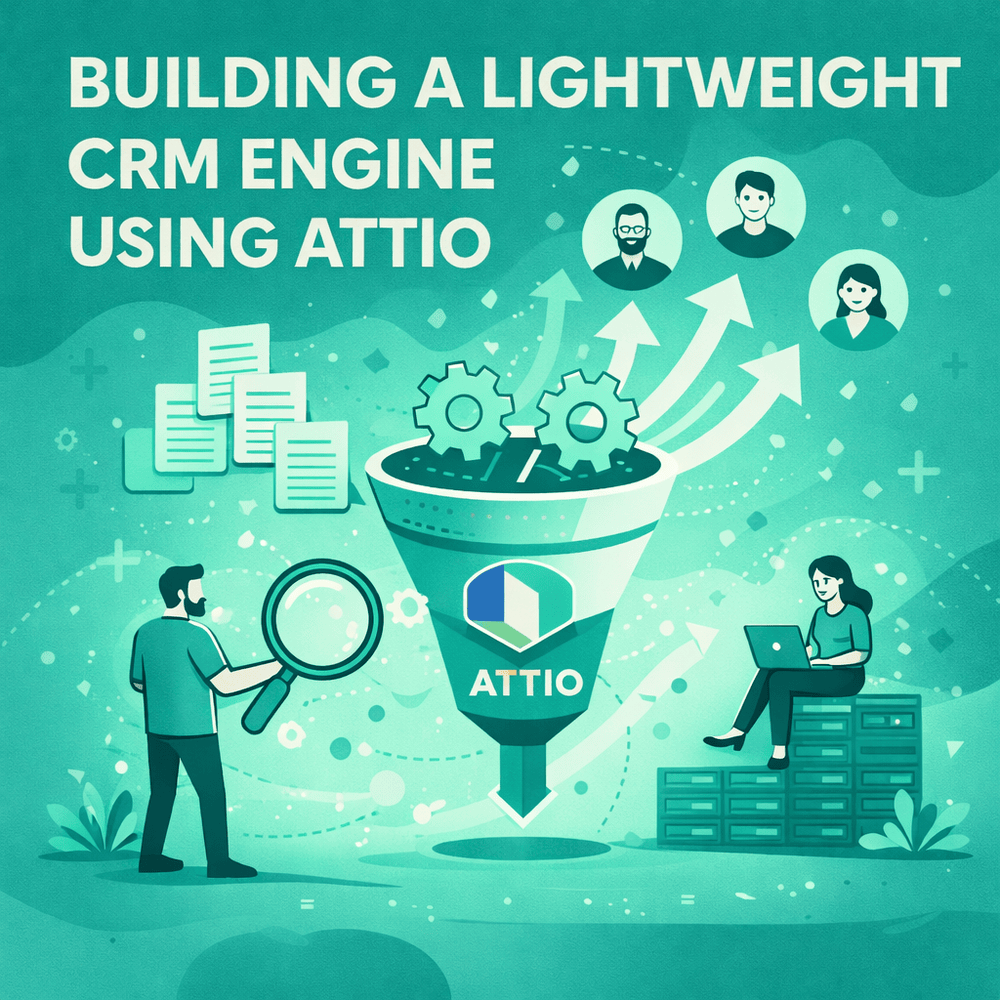
Building a Lightweight CRM Engine Using Attio
Modern go-to-market operations demand CRM systems that are flexible, fast to configure, and capable of supporting evolving workflows without unnecessary complexity. As teams move away from rigid legacy platforms toward highly adaptable systems, there is growing interest in tools that serve as lightweight CRM engines while still offering automation, customisation, and real-time intelligence. Attio is frequently cited in this context for its flexible data model, automation capabilities, and AI-ready infrastructure.
This blog provides a neutral and informative overview of how Attio can be used to build a lightweight CRM platform that supports different stages of growth. Insights are drawn from multiple independent analyses to help readers understand Attio’s capabilities, limitations, and use cases, without expressing personal opinions or bias. Readers who want a broader martech context can explore educational materials available at https://sjcurve.com/, as well as strategic insights on technology decision-making at https://sjcurve.com/navigating-the-martech-landscape-a-guide-for-business-owners/.
Why Lightweight CRM Systems Matter
Many companies experience friction when adopting traditional CRM systems because they tend to require extensive setup, technical expertise, and administrative overhead. A lightweight CRM engine is designed to address these challenges through:
- Faster onboarding
- Flexible data structures
- No-code configuration
- Simple automation
- Lower maintenance requirements
- Real-time visibility from synced interactions
Attio aligns with these characteristics by providing an approach that focuses on flexibility and ease of use while allowing teams to scale their CRM environment as operations grow.
Attio's Approach: A Flexible, Composable CRM Structure
Customisable Data Objects
Attio allows teams to create custom objects that mirror their real-world operational models. Instead of relying on a predefined set of objects, teams can define custom entities such as:
- Subscriptions
- Portfolio companies
- Partner accounts
- Buyer and seller entities
- Service requests
- Campaign records
This structure supports businesses with unique workflows or specialised data requirements.
Relationship-Driven Architecture
Relationship attributes in Attio enable bidirectional links between entities, such as:
- People ↔ Companies
- Companies ↔ Deals
- Projects ↔ Partners
These relationships ensure that teams can view context without duplicating information. This is particularly valuable for segmentation, qualification models, and multi-stakeholder accounts.
Automation Capabilities: Building an Engine That Operates Itself
Attio’s workflow engine supports no-code logic to streamline operational processes. Teams can automate:
- Lead routing
- Qualification updates
- Renewal reminders
- Churn tracking
- Pipeline stage transitions
- Customer success tasks
These automations allow organisations to build a foundation for attio crm automation without relying on engineering resources.
Common Workflow Examples
- Churn Monitoring
- Automatically detect subscription cancellations and notify the team to initiate outreach.
- Seat Count Monitoring
- Identify product adoption, expansion, or reduction events in real time.
- MRR Tracking
- Monitor fluctuations in recurring revenue across accounts.
Attio workflows allow even small teams to operate with the consistency of larger organisations, making attio workflows a key component of a lightweight CRM platform.
AI-Native Features Supporting CRM Automation
Attio integrates AI into its architecture to support classification, summarisation, and intelligent enrichment. This applies to:
- Attribute autofill
- Risk scoring
- Summary generation
- Data research
- Context capture from synced communication
This approach aligns with the broader industry shift toward systems that evolve from passive record-keepers into action-driven engines.
Using Attio to Build a Lightweight CRM Engine
Below is a neutral, structured view of how organisations can assemble a lightweight CRM engine using Attio’s core capabilities.
1. Configure Foundational Objects
A typical implementation may include:
- People
- Companies
- Deals
- Custom operational objects
- Lists for segmentation
2. Define Key Attributes
Attributes might include:
- Lifecycle stage
- Engagement score
- Product usage metrics
- Subscription status
- Account notes
- Renewal month
Attributes provide the data that workflows depend on.
3. Automate Repetitive Actions
Workflow templates can support:
- Deal progression
- Notification triggers
- Customer follow-up tasks
- Slack alerts
- MRR updates
These workflows form the operational core of a lightweight crm platform.
4. Visualize Pipelines and Intelligence
Attio’s kanban views and reporting dashboards allow teams to create:
- Sales pipelines
- Renewal timelines
- Segmentation overviews
- Activity insights
- Performance summaries
This supports actionable decision-making without complex reporting layers.
Comparing Lightweight and Heavyweight CRM Approaches
A neutral comparison helps highlight structural differences without expressing preference:
Category | Lightweight CRM (Attio) | Hardweight CRM |
Setup | Minutes to Hours | Weeks to months |
Customisation | No code and flexible | Highly configurable but technical |
Automation | Visual automation builder | Advanced but often complex |
Maintenance | Low | Higher due to admin overhead |
Cost | More Accessible | Typically more expensive |
Scalability | Supports Growing teams | Designed for enterprise depth |
The Role of Integrations and the Developer Platform
Attio’s developer tools expand the CRM’s capabilities without compromising its lightweight nature. The platform offers:
- REST API for synchronising product data
- App SDK for building internal CRM extensions
- No-code connectors through Zapier, n8n, and Pipedream
- Real-time webhooks
- Ability to sync usage signals from different systems
These capabilities allow teams to create a scalable operational engine while maintaining a simple configuration layer.
Attio Across Different Growth Stages
Attio can support organisations at various stages, including:
Startup Stage
- Fast CRM setup
- Basic automation
- Email and calendar sync
- Simple object configuration
Growth Stage
- Pipeline modelling
- Lead scoring workflows
- Segmentation and enrichment
- Automated engagement triggers
Mid-Scale Teams
- Alignment across sales, marketing, and customer success
- Multi-object data models
- AI-supported summaries and classification
Enterprise Stage
- Permission structures
- Integration with existing data systems
- High-volume processing capabilities
Attio’s flexible architecture allows organisations to scale without rebuilding foundational components.
Readers interested in understanding how lightweight CRM engines fit within broader business infrastructure can explore technology insights provided at https://sjcurve.com/ and strategic analysis in the martech guide available at https://sjcurve.com/navigating-the-martech-landscape-a-guide-for-business-owners/.
Conclusion: A Composable Approach to CRM Implementation
Attio provides a framework that enables teams to assemble a lightweight, flexible, automation-ready CRM engine that supports modern GTM strategies. Its data model, workflow engine, AI capabilities, and developer tooling enable a system that can adapt to diverse operational needs without requiring extensive technical expertise.
This article has presented a balanced overview based on independent analyses and real-world use cases. Readers can evaluate Attio within the context of their own workflows, team structures, and growth plans, recognising that different organisations benefit from different levels of CRM complexity.
For those seeking broader guidance on technology selection, martech planning resources at https://sjcurve.com/ and insights on navigating the CRM landscape at https://sjcurve.com/navigating-the-martech-landscape-a-guide-for-business-owners/ offer additional structured information.